
Effective Supply Chain Solutions and Services Across the Globe

Supply Chain Management Services - Procurement, Consulting And Logistics Solutions
Supply Chain Management (SCM) handles the supervision of the supply of products and services. From its origin to the consumer’s doorstep. Supply chain management companies are in charge of establishing a whole network of suppliers that transport the product from its raw material origin… to the companies that sell the finished product to clients.
Key Factors in Supply Chain Management
All strategic supply chain management revolves around customer value. The ultimate goal is to provide an excellent customer experience. How is this accomplished? There are four basic steps to take:

Types of Supply Chain Management
The four most common types of supply chain management are as follows:

The Constant
This strategy is appropriate for businesses who manufacture the same sort of product over and over again… with minor variations. Allows you to give items discounted pricing.

The Quick
This one is great for producers whose product range is continuously changing. It is more adaptable to market shifts and trends. The one who adapts first is the one who lives!

The Efficient
Intended for industries that require great end-to-end performance. To correctly load and sweat equipment assets, this model primarily relies on production predictions.

The Flexible
It’s a protocol that may be activated or deactivated based on market movements. It’s perfectly suited to users’ high demands but can also regulate and absorb periods of low or no demand. Sure, the companies will need the necessary machinery as well as staff with deep experience.
How Does Supply Chain Management Work?
Traditional supply chain management systems include five components, according to CIO:

Supply Chain Management
The first thing we must do is identify the needs and opportunities. This allows us to optimise staff, procedures, and technology to give the finest product possible.
Keep in mind that the supply chain’s aim and vision must align with the companies. Supply chain management must identify its strategic role and begin to put in place value-added activities across the whole supply chain.
This plan should prioritise the improvement of business processes. For example, in removing redundancies, proposing innovative ideas, or developing methods to measure savings.
The answer is simple: if you don’t set limitations, you’ll end up paying more. Monitoring key performance indicators will assist you in maintaining more control over your organisation.
It is vital to experiment in order to determine what will work best for you. However, some factors to consider are inventory control (access), management (setting levels, etc.), and integrity (expiration).
Frequently Asked Questions on Supply Chain Management
Planning in the supply chain helps to simplify operations, enhance productivity, eliminate wasteful spending, and build stronger client relationships. Planning, when done effectively, may assist decrease costs associated with purchasing, manufacturing, inventory management, and transportation.
Global supply chains are networks that cross continents and nations to source and distribute goods and services. The mobility of information and resources is one of the most important foundations.
One of the various branches of the supply chain is procurement. It serves as a structure for a firm to efficiently carry out all of its daily activities, monitoring the outcomes and assessing how the items that will be provided to the clients are made.
In a nutshell, it facilitates and improves the movement of products, information, and commerce. Companies benefit from an optimised and efficient business, building better ties with partners and customers.
Data analysis is an excellent tool for anticipating and determining where we need to improve. For example, it assists us in optimising warehousing and storage, which is essential in a bigger supply chain strategy. This allows us to optimise space, decrease damage, reduce packing, and do a variety of other things.
The first step is to examine existing processes and determine where waste is still an issue. You may, for example, compare the things you buy to your outcome to prevent expenditures. Talking to relevant managers or operators or solicit further feedback from customers or service suppliers.
Internal risks (those under your control) and external risks (those that are beyond your control) coexist. In this regard, the following sorts of dangers are identified: 1. Financial hazards 2. Poor planning 3. Regulations 4. Environmental 5. Socio-political 6. Human behaviour
A good supply chain must have three components: flexibility, data, and long-term planning. In this regard, some of the aspects that impact its correct operation are as follows: 1. Maintain your adaptability. 2. Trust data and technology 3. Plan for the future 4. Remember who is your end customer
The planning and administration of acquisitions, conversion, and logistics management operations are all part of supply chain management. It also handles with the coordination of all parties (from suppliers to customers). It deals with demand management inside a corporation in this manner.
The supply chain is a difficult process in and of itself, and adding innovations is a problem for businesses. It’s critical to move fast and to balance rising customer demand with competitive pricing. In this regard, procurement may also assist to determine whether parts of the supply chain are not competitive or to set more ambitious goals.
Product We Serve

Industrial Oil, Chemicals, and Lubricants
Industrial Oil, chemicals and industrial lubricants are essential to the process industry. Industrial oils…
View More

HVAC & Refrigeration
HVAC & refrigeration is vital to today’s lifestyle for personal comfort, food preservation, medical…
View More

Heavy Machinery Equipments
Heavy plant machinery & vehicles used in construction tasks are specifically designed to perform…
View More

Electrical & Power Equipments
Long distance transmission of electrical power is one of the major challenges of the…
View More
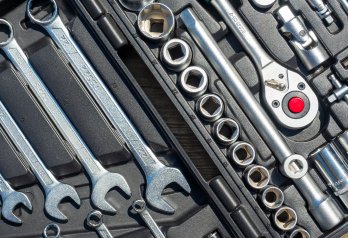
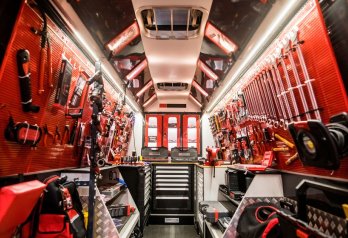
Maintenance, Repair Tools
Troubleshoot problems with our maintenance, repair tools and spare parts. Acore Solutions has the…
View More
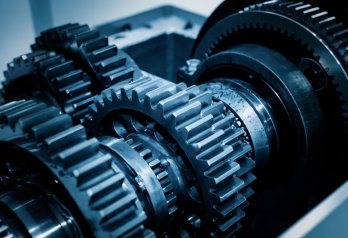
Rotary Equipment
Rotary equipment is the given categorisation for mechanical devices that provide kinetic energy to…
View More
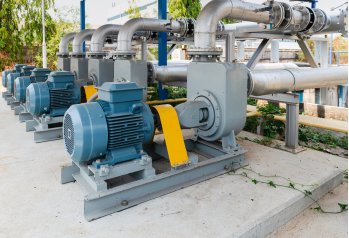
Pumps & Spare Parts
Buoyed by the technological advancements, growth in the market is largely reliant on significant…
View More
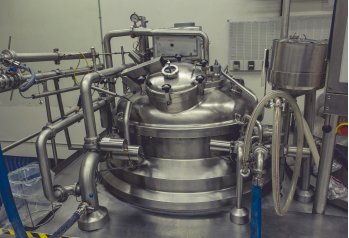
Process Equipment
Industrial processing equipment encompasses a wide range of products and spare parts that are…
View More

Safety Tools & Equipments
Any workplace injury causes an immeasurable suffering. Companies that put safety first turn out…
View More

Instrumentation
Instrumentation includes devices capable of detecting change, physical or otherwise, in a particular process.…
View More
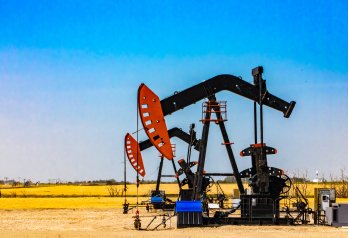
Drilling Equipment
Drilling equipment is widely used in oilfield supply stores in both land and offshore…
View More
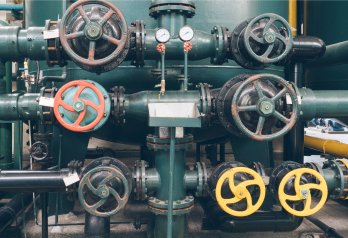
Industrial Valves
Industrial Valves are an essential piece of equipment within every branch of the manufacturing…
View More
Certifications
Acore holds industry-recognized certifications that reflect our commitment to quality, safety, and excellence in every solution we deliver.

Your Worldwide Source for Industrial Supply
Acore provides trusted industrial supply solutions to clients across the globe, ensuring reliability, efficiency, and cost-effectiveness. With a broad product range and expert support, we deliver resources that power industries forward.

Japan

Jordan

Malaysia

Netherlands

Singapore

South Korea

Switzerland

UAE

UK

USA

Canada

France

Indonesia

Have a Challenge? We Have the Solution — Reach Out Today!
Our team is ready to provide tailored solutions for your toughest business needs. Connect with us today and discover how Acore can deliver results that matter.
info@acoreequip.com
Office 118, Ebene Junction, Rue de la Democratie, Ebene, Republic of Mauritius
Fill The Form
Share your details and we’ll connect with the right solution for your business.